Biography
I work on self-referential probability and rationality. Self-referential probability scenarios are situations in which the agent’s credences can serve as evidence for the truth or likelihood of a proposition. My focus has been on the Probabilistic Liar, which is structurally similar to the Liar paradox.
In my PhD, I used the Probabilistic Liar as a useful example and focus to explore suspended judgment in a credal framework, norms of rationality and their underlying logics, the nature of degrees of belief, and problems of indeterminacy and the logic of higher-order indeterminacy.
My current research is focused on the intersection of formal epistemology, philosophy of science, and philosophy of logic. In particular, examining idealising assumptions in Bayesian rationality frameworks and how we can give these models normative force. This research is developed along two main areas (i) developing an account for an implicit assumption made in the ideal rationality literature: that constraints on ideal agents place normative constraints on non-ideal agents and (ii) developing an account of the source of the normativity by giving bridge principles between logic and partial beliefs that will allow me to connect work on the normativity of logic with the literature on ideal rationality.
- Self-Referential Probability
- Imprecise Credences
- Liar Paradox
- Vagueness and Indeterminacy
- Suspended Judgment
- Normativity of Logic
- Formal Epistemology
PhD in Philosophy, 2022
University of Leeds
MA in Logic and Philosophy of Mathematics, 2017
University of Bristol
BSc in Mathematics and Philosophy with specialism in Logic and Foundations, 2016
University of Warwick
Draft Papers
What are degrees of belief? A Defence of Comparativism.
What are degrees of belief? Accounts of credence often assume that they can be represented by a numerical function and focus on defending various norms or constraints on credence given this. Without focusing on the question of what degrees of belief are, however, we see that various idealising assumptions that go into understanding credences as numerically representable are ignored. In this paper, I defend comparativism as an interpretation of what degrees of belief are. I outline the comparativist position and show how it is possible to represent an agent’s comparative beliefs using a probability function. I consider problems that have been presented for comparativism that suggest comparativism cannot meet the desiderata I have outlined. Going through these objections in turn, I argue that comparativism is a viable account.
Suspended Judgement. An Imprecise Credence Account of Neutral Attitudes in a Credal Framework
Suspended judgement is often (and perhaps most naturally) talked about in the context of a traditional belief framework where an agent has a belief or disbelief. In this paper, I argue for an account of suspended judgement in a credal framework as imprecise credence. There are a number of accounts of suspended judgement as imprecise credence, but I argue that these accounts fail to capture key features of suspended judgement. I propose an account of suspended judgement as credal gaps within a comparativist interpretation of imprecise credence.
The Cognitive Role of Indeterminacy
There are a variety of norms that purport to govern what attitude an agent ought to adopt. It is unclear, however, what attitude a rational agent ought to have towards an indeterminate proposition or whether there is a norm that prescribes an attitude. It is also unclear what falls under the term indeterminate and the range of phenomena that might be referred to as indeterminate. This paper address the normative question of what attitude a rational agent ought to adopt towards cases of indeterminacy. I defend the view that indeterminacy should be understood as an umbrella term that encompasses a range of related phenomena. In light of this I argue we should adopt a position I call modest pluralism to the normative question. Modest pluralism holds that there is no unique attitude an agent ought to adopt to cases of indeterminacy, but rather a range of permissible attitudes to adopt.
Work in Progress
On the Source(s) of the Normativity of Logic
The role of Idealisation in Theories of Rationality
Abstract Probabilities and Rational Ideals: Defending a Platonist Framework
Outside Academia
Interests
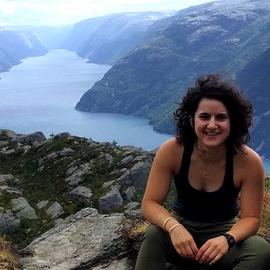
When I’m not doing philosophy, I can be found rock climbing, running or hiking. I’ve taken up Munro bagging since moving to Scotland.


Music
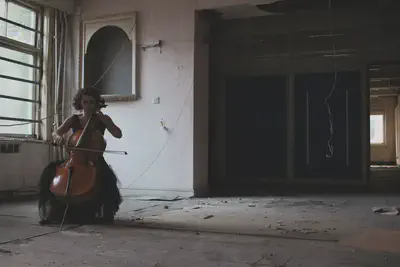
I also play the cello and have performed with ensembles across the UK and Europe, as well as solo performances (including recent forays into playing at friends’ weddings!).
I’ve taken part in two film projects as a cellist:
Prélude (2020): A proof of concept piece for director, producer and film-maker Rochyne Delaney McNulty’s (successful!) funding bid with Bradford Arts Council.
Out of the Darkness (2013): Working with writer and director Emma Lucia Hands on her short film funded by the Arts Council of Wales.